
Community HIV Voluntary Testing & Counseling Tournaments
Partners


During my service as a Peace Corps Community Health volunteer in Eastern Province, Zambia, I organized two large-scale Voluntary HIV Counseling and Testing (VCT) sports tournaments, combining competitive soccer for boys and handball for girls with free, on-site HIV testing and counseling. The events ran in partnership with local healthcare providers and PLAN International, and together drew over 1,900 attendees with 237 individuals receiving HIV tests.
VCT tournaments use the draw of sports to bring players, families, and community members together in one place, then offer free and voluntary HIV testing — each consultation done privately in a covered area.
HIV in Zambia
In 2017, Zambia had an 11.5% adult HIV prevalence (ages 15-49) with 1.1 million people living with HIV and approximately 48,000 new HIV infections per year.[1]
Despite overall progress in the decrease of new infections, among young women, the prevalence of infection is more than double that of young men. The factors contributing to this disparity are complex and multi-fold:
- Gender-based power imbalances: In Zambian culture, women have traditionally had less power in relationships and are often victims of gender-based violence
- Limited educational access: Young women have significantly less access to educational services due to responsibilities in preparing food and caring for children at home
- Cultural barriers: Significant misconception surrounding HIV testing and fear of negative consequences
For more on HIV/AIDS in Zambia, check out AVERT's comprehensive profile on the challenges and progress in addressing the epidemic.
The Gender Disparity
Among adolescents and young adults (ages 15-24) in Zambia, young women face HIV prevalence rates more than double that of young men. Research shows that in 2016, 6.5% of young women were living with HIV compared to 2.8% of young men in this age group.[4]
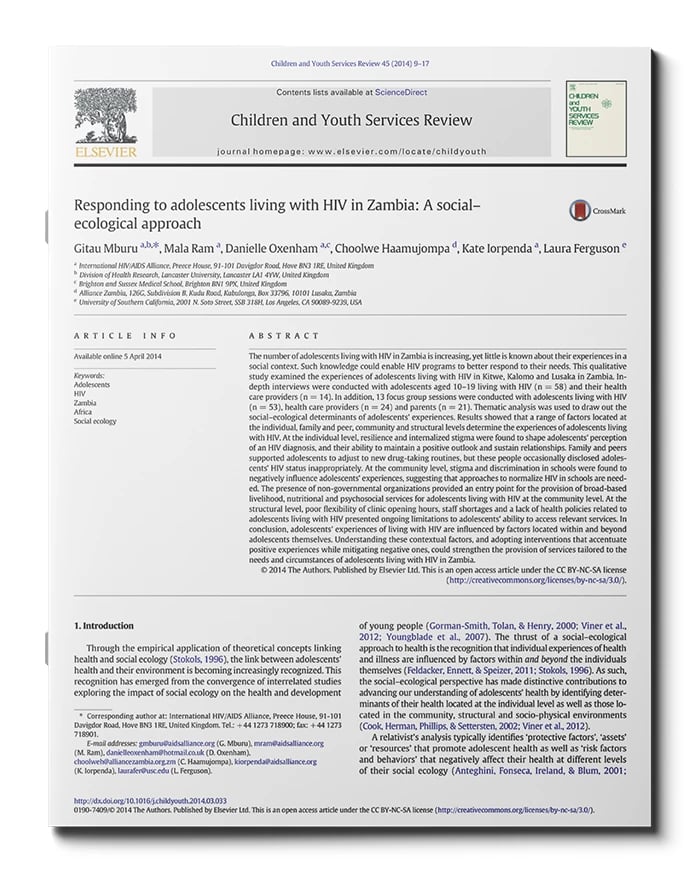
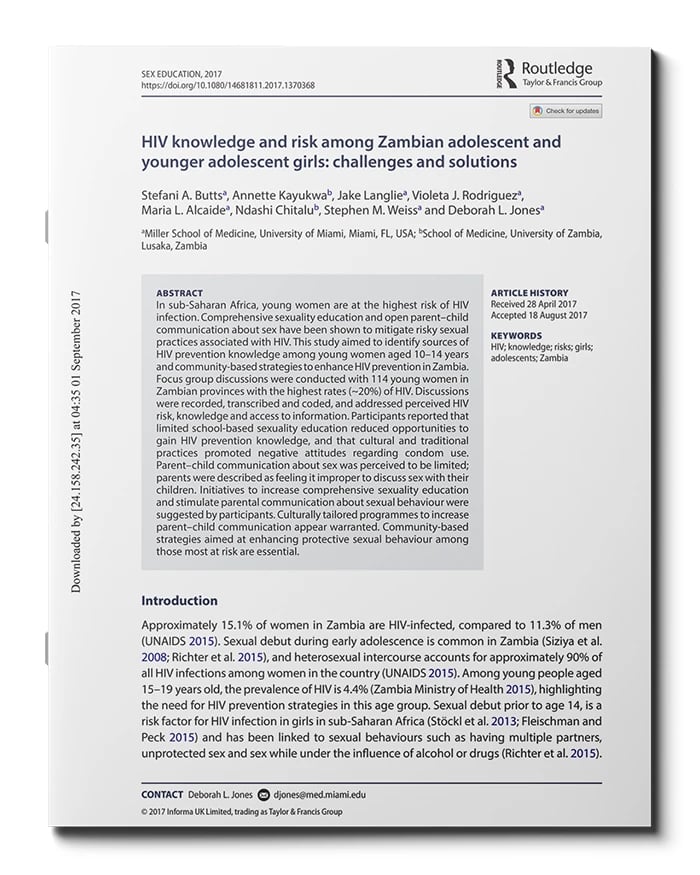
A Shifting Picture
The gender gap isn't static. A study tracking HIV trends in Zambia from 2002 to 2014 found that HIV prevalence among young urban men was rising, from 3.7% to 7.3%, while declining among young women over the same period.[11] The female-to-male prevalence ratio narrowed from 4.2 to 1.5 in urban areas, suggesting the epidemic is converging in ways that national averages conceal.
Geographic disparities add another layer of complexity: national trends toward declining prevalence mask pockets of continuing high rates in specific rural provinces, where the declines seen in urban areas haven't materialized to the same degree.[12]
Studies show significant gaps in comprehensive HIV knowledge among Zambian youth. According to the 2018 Zambia Demographic and Health Survey, only 36% of young women and 40% of young men (ages 15-24) had comprehensive knowledge about HIV prevention.[5]
Barriers to Testing
A compounding factor are the significant barriers to an individual being tested for HIV in order to learn their status. Research from Sub-Saharan Africa identifies multiple obstacles:[6]
- Stigma and discrimination: Fear of community judgment and social isolation
- Confidentiality concerns: Worries about privacy and who will learn their status
- Fear of positive results: Anxiety about potential diagnosis and its implications
- Lack of perceived risk: Belief that they aren't at risk of infection
- Access barriers: Distance to facilities, cost, and time constraints
- Gender-based barriers: Women needing partner permission or fearing intimate partner violence
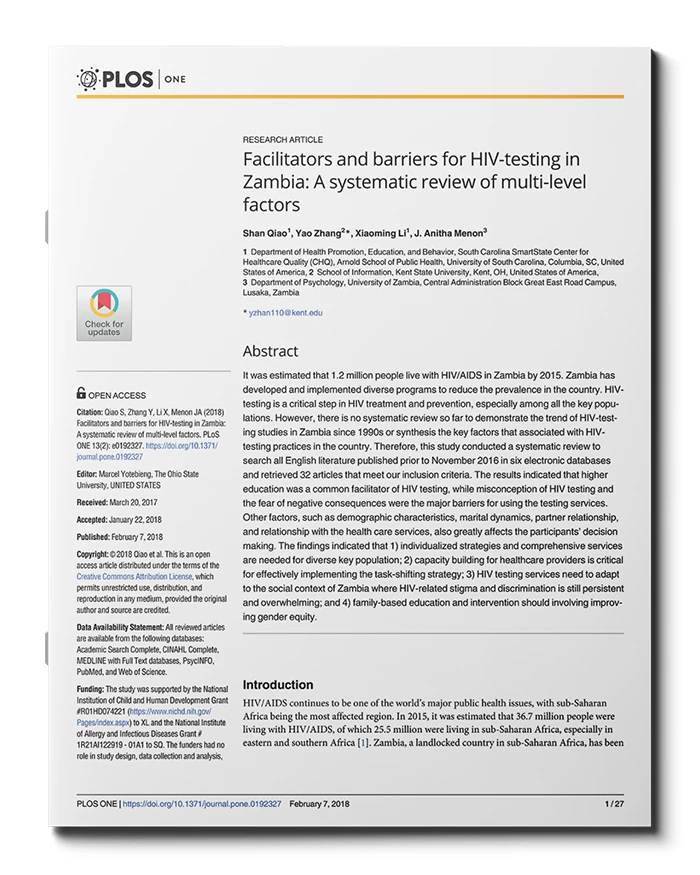
A systematic review published in BMC Public Health found that stigma remains the most significant barrier to HIV testing in Sub-Saharan Africa, with fear of discrimination affecting testing uptake across all demographic groups.
Testing Gaps in Zambia
Research in Zambia puts a finer point on these barriers. A 2013 study found that 64% of Zambian men and 56% of Zambian women had never been tested for HIV, and only 23% of Zambians voluntarily requested a test in 2009, despite the country's 11.5% prevalence rate.[7]
The same study found that tolerance of gender-based violence was a significant independent predictor of not testing (OR=2.10), linking HIV testing avoidance directly to the broader dynamics of gender inequality.
Why Testing Matters
Knowing one's HIV status is incredibly important in preventing new infections. It's also an essential entry point to HIV treatment, care and support services.
Once you know your status, you can start antiretroviral therapy, and people on treatment are 96% less likely to transmit HIV to an uninfected partner
Community-based testing is particularly effective at reaching people who wouldn't otherwise seek testing. A systematic review of home-based HIV testing trials across Sub-Saharan Africa found an overall uptake rate of 83.3%, and men were equally as likely to accept testing as women when it was offered in a community setting.[8]
Research also shows that community-based approaches identify HIV-positive individuals at higher CD4 counts than facility-based testing, indicating earlier diagnoses and better treatment outcomes. Mobile community models reached the highest proportion of men (50%) of any testing approach studied.[9]
Testing enables individuals to make informed decisions about their transmission prevention options, including:
- Services to prevent children from becoming infected with HIV
- Male and female condoms
- Voluntary medical male circumcision
- Pre-exposure and post-exposure prophylaxis (PrEP and PEP)
The Tournament Model
Voluntary HIV counseling and testing (VCT) initiatives help address the stigma and misinformation surrounding HIV in these communities, and allow individuals the opportunity to learn their status which can then inform their decision-making and provide them access to antiretroviral treatment.
During my time as a Peace Corps volunteer, I organized 2 VCT sports tournaments for both boys and girls teams in my community. The approach combined:
- Community engagement through sports: Using soccer tournaments as a draw to bring community members together
- Professional partnerships: Collaborating with local healthcare professionals and clinics to provide testing
- NGO support: Working with PLAN International and other NGOs to provide necessary counseling services
- Comprehensive education: Providing information on HIV prevention, transmission, and treatment options
For men in particular, stigma and concerns about confidentiality are the primary barriers to facility-based HIV testing.[10] The tournament format directly counters these barriers, bringing testing into a trusted, public community space rather than a clinical one and normalizing testing as part of a shared event rather than a solitary health decision.
Results
Both events were incredibly well attended:
Creating a Legacy
Through these experiences, I developed a comprehensive document outlining the action plan for organizing VCT tournaments and the process for having a successful event.
The action plan was distributed to Peace Corps volunteers throughout Zambia for use in planning VCT tournaments in other volunteer placements, extending the impact beyond my community.
The action plan included:
- Pre-event planning: Timeline, partnership development, and resource allocation
- Community mobilization: Strategies for outreach and engagement
- Event logistics: Setup, flow, and management of testing and counseling services
- Follow-up procedures: Linking individuals to care and support services
- Lessons learned: Best practices and common challenges to anticipate
Plan Your Own VCT Tournament
This interactive tool is based on the original Action Plan Worksheet developed for Peace Corps Zambia volunteers. Pick a date for your tournament and it will generate a full week-by-week preparation checklist you can print or save as a PDF.
Generate Your VCT Tournament Action Plan
Select your tournament date and this guide will calculate your full preparation timeline — with tasks, responsible parties, and target dates — from 10 weeks out to post-event follow-up. Printable as a PDF.
Select a tournament date above to generate your action plan.
A full countdown checklist with tasks and responsible parties, printable as a PDF.
References
Statistics on Zambian HIV prevalence from UNAIDS (2017, 2018). Gender disparity data from UNAIDS Global AIDS Update (ref4) and Nakazwe et al. (ref11) on diverging male/female trends. Geographic variation documented by Kayeyi et al. (ref12). Comprehensive HIV knowledge statistics from the 2018 Zambia Demographic and Health Survey. Testing barriers and uptake from Musheke et al. (ref6), Gari et al. (ref7), Sabapathy et al. (ref8), Sharma et al. (ref9), and Hamilton et al. (ref10).