
Community Participatory Analysis in Naviruli, Zambia
Understanding a Community & Its Challenges, From the People Most Impacted
Partners


As a Peace Corps volunteer, I was placed in Naviruli, Eastern Province, Zambia and paired with a community advocate. Over the course of 2.5 years, I worked directly alongside smallholder farmers learning their challenges, connecting them to resources, and facilitating participatory analysis to help the community drive its own development.
The Challenge
There's an estimated 1.6 million smallholder farmers (growing on less than 5 hectares of land) in Zambia. Their livelihood is incredibly challenging for reasons that are complex, interconnected, and often out of their control.
Most of these farmers operate within a traditional land tenure system. In this system, lands that are apportioned by traditional leaders are typically are not formally titled. This naturally leads to frequent land disputes over what land belongs to whom. And the ultimate result is a general lack of incentive for farmers to choose farming practices which build soil health and improve land quality. If they're land can be disputed in the future, why invest time and money into its enrichment.
There are many other factors at play as well. Inputs for farming are expensive but often necessary for farmers growing in depleted soils. Farming families rely on maize as the primary food staple, and, because of poor post-harvest storage solutions for their maize crop, farmers are often forced to sell to a flooded market. And flooded markets mean consistently mean low payouts for everyone.
Additionally, farm families primarily rely on family labor; events like illness and funerals can impact crop yields significantly. As a result, their labor supply, and likewise their food supply, is at frequent risk.
Compounding Factors
- Poor road infrastructure limits market access and increases transportation costs
- High prevalence of HIV and malaria impacts family labor and productivity
- Lack of viable credit options prevents investments in improved inputs or equipment
- High transport costs eat into already thin profit margins
- Few off-farm earning opportunities leave families vulnerable to crop failure
- Climate change brings increasingly unreliable rainfall and severe weather events
Farmers are utterly dependent on rainfall which is increasingly unreliable. Severe weather events — such as heavy rainfall that floods fields, or month-long droughts that destroy an entire crop — are becoming more common as a result of climate change.
Peace Corps LIFE Program
In my role as a Peace Corps volunteer in the Linking Income, Food, and the Environment (LIFE) program in Zambia, I spent as much time as I could with these farmers.
Consultation most often took the form of working right alongside farmers in their fields — preparing fields, planting crops, digging ditches, hoeing rows, and harvesting. This built trust, helped me understand constraints, and also educated me, if only superficially, to the daily struggles of these farmers.
PACA Resources
The Participatory Analysis for Community Action (PACA) methodology guided much of my approach. These Peace Corps resources were essential tools for structuring community engagement:
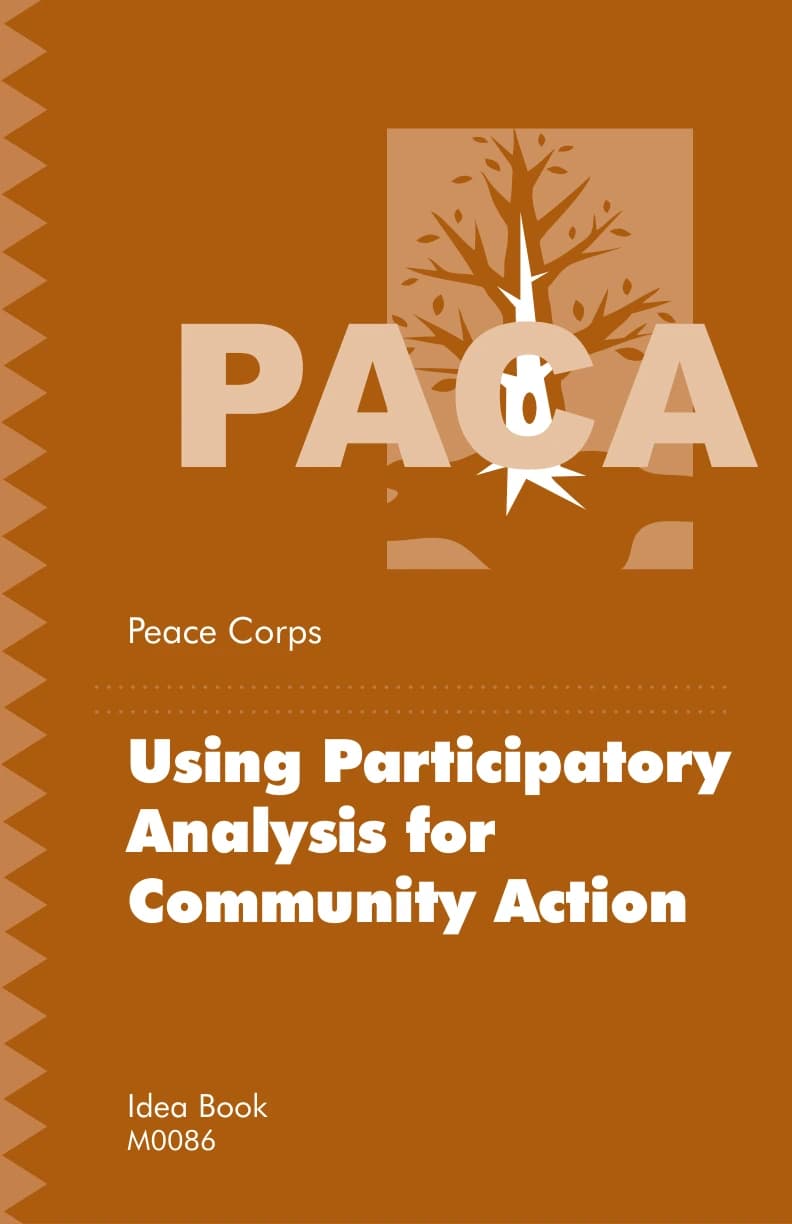
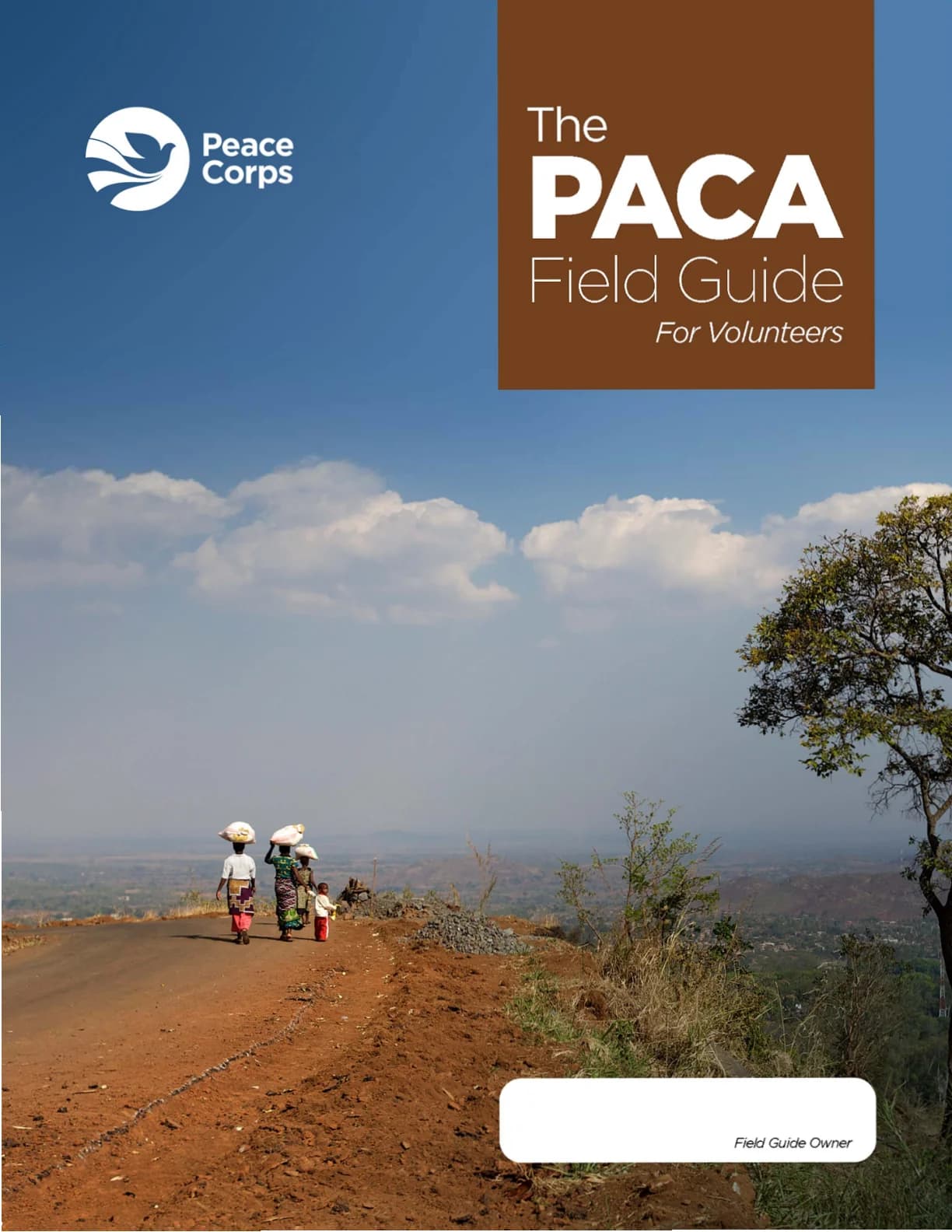
Seasonal Assessment
Through participatory analysis, we developed a comprehensive seasonal assessment documenting the ebb and flow of agricultural life in Naviruli. The data below was collected through community workshops, farmer interviews, and direct observation over the course of my service.
Community Seasonal Assessment
Naviruli, Chadiza District, Eastern Province, Zambia
A composite view of Naviruli's seasonal patterns. Rainfall, food insecurity, and labor demand overlap to create distinct periods of vulnerability throughout the year.
Data collected through participatory community assessment methods in Naviruli, Chadiza District, Zambia (2017-2018). Climate data sourced from local weather stations and community records.
This assessment helped identify peak labor demand periods, the hungry season when food stores run low, critical planting windows, healthcare needs that spike during certain seasons, market opportunities, and weather vulnerability periods.
How Farmers Spend Their Day
One of the most revealing aspects of our participatory analysis was understanding how men and women in farming households allocate their time each day. The data below, collected through community time-use surveys, illustrates a pattern common across rural Zambia: women bear a disproportionate share of unpaid domestic labor, while men spend significantly more time on paid work.
How Farmers Spend Their Day
Gender-based time allocation among smallholder farming households in Naviruli
Average minutes per day spent on each activity, comparing men and women among smallholder farming households in Naviruli.
Source: Community time-use survey conducted among smallholder farming households in Naviruli, Chadiza District, Eastern Province, Zambia. Data reflects average daily time allocation in minutes.
This time-use imbalance has direct implications for development interventions: any initiative that reduces the time women spend on energy-intensive tasks like cooking over wood fires, collecting firewood, or hauling water can free up hours for income generation, education, or rest.
Being a Connector
Perhaps the greatest benefit I provided was simply as a connector — bridging the gap between community needs and available resources. I built partnerships with Zambian staff working for NGOs throughout Eastern Province, including Profit Plus, Feed the Future, PLAN International, local agricultural extension officers, input suppliers, and community-based organizations.
Try matching each community member with the resource person who can help them most:
Community Members — tap one
The Connector Challenge
Tap a community member above, then tap the resource person below who can help them most.
Resources — select a person first
Lessons Learned
This experience reinforced several key principles of effective community development:
Presence Matters
Spending time in the community, working alongside farmers in their fields, built relationships that enabled everything else. Development work requires sustained presence, not quick visits.
Listen First
Farmers are experts on their own context. They understand their constraints, resources, and opportunities better than any outsider ever could. The best solutions emerge when we listen rather than prescribe.
Be a Bridge
Sometimes the most valuable contribution is connecting people to resources that already exist. Development doesn't always require new programs — sometimes it just requires better connections.
Respect Local Knowledge
Traditional farming practices exist for good reasons. While improved techniques can help, they must be adapted to local conditions and integrated with existing knowledge. Innovation builds on tradition, it doesn't replace it.
These references span the core themes of this work: participatory development methodology, smallholder farming in Zambia, land tenure, maize markets, the labor impacts of HIV/AIDS and malaria, gender and time-use inequity, post-harvest loss, agricultural extension, social capital, and climate vulnerability.
- Chambers, R.. (1994). Participatory rural appraisal (PRA): Analysis of experience. World Development, 22(9), 1253-1268. https://doi.org/10.1016/0305-750X(94)90003-5
- Cornwall, A., & Jewkes, R.. (1995). What is participatory research?. Social Science & Medicine, 41(12), 1667-1676. https://doi.org/10.1016/0277-9536(95)00127-S
- Sitko, N. J., & Jayne, T. S.. (2014). Structural transformation or elite land capture? The growth of 'emergent' farmers in Zambia. Food Policy, 48, 194-202. https://doi.org/10.1016/j.foodpol.2014.05.008
- Deininger, K., & Jin, S.. (2006). Tenure security and land-related investment: Evidence from Ethiopia. European Economic Review, 50(5), 1245-1277. https://doi.org/10.1016/j.euroecorev.2005.02.001
- Mason, N. M., & Myers, R. J.. (2013). The effects of the Food Reserve Agency on maize market prices in Zambia. Agricultural Economics, 44(6), 619-633. https://doi.org/10.1111/agec.12068
- Chapoto, A., & Jayne, T. S.. (2009). Impacts of AIDS-Related Mortality on Farm Household Welfare in Zambia. Review of Agricultural Economics, 31(3), 505-527. https://doi.org/10.1111/j.1467-9353.2009.01450.x
- Chima, R. I., Goodman, C. A., & Mills, A.. (2003). The economic impact of malaria in Africa: A critical review of the evidence. Health Policy, 63(1), 17-36. https://doi.org/10.1016/S0168-8510(02)00036-2
- Croppenstedt, A., Goldstein, M., & Rosas, N.. (2013). Gender and Agriculture: Inefficiencies, Segregation, and Low Productivity Traps. World Bank Research Observer, 28(1), 79-109. https://doi.org/10.1093/wbro/lks024
- Affognon, H., Mutungi, C., Sanginga, P., & Borgemeister, C.. (2015). Unpacking Postharvest Losses in Sub-Saharan Africa: A Meta-Analysis. World Development, 66, 49-68. https://doi.org/10.1016/j.worlddev.2014.08.002
- Anderson, J. R., & Feder, G.. (2004). Agricultural Extension: Good Intentions and Hard Realities. World Bank Research Observer, 19(1), 41-60. https://doi.org/10.1093/wbro/lkh013
- Woolcock, M., & Narayan, D.. (2000). Social Capital: Implications for Development Theory, Research, and Policy. World Bank Research Observer, 15(2), 225-249. https://doi.org/10.1093/wbro/15.2.225
- Wheeler, T., & von Braun, J.. (2013). Climate Change Impacts on Global Food Security. Science, 341(6145), 508-513. https://doi.org/10.1126/science.1239402
- Carter, M. R., & Barrett, C. B.. (2006). The economics of poverty traps and persistent poverty: An asset-based approach. Journal of Development Studies, 42(2), 178-199. https://doi.org/10.1080/00220380500405261
- Kannan, S., & Bessette, D. L.. (2021). Time-use among men and women in Zambia: A comparison of grid, off-grid, and unconnected households. Energy Research & Social Science, 79, 102151. https://doi.org/10.1016/j.erss.2021.102151
- Hansen, K. T.. (1997). Keeping House in Lusaka. Columbia University Press. https://cup.columbia.edu/book/keeping-house-in-lusaka/9780231087018
- Schlyter, A.. (1999). Recycled Inequalities: Youth and Gender in George Compound, Zambia. The Nordic Africa Institute. https://www.diva-portal.org/smash/get/diva2:275041/FULLTEXT01.pdf