Mobile Malaria Survey
Building Digital Tools for Public Health Data Collection in Rural Zambia
Partners

Tech Stack

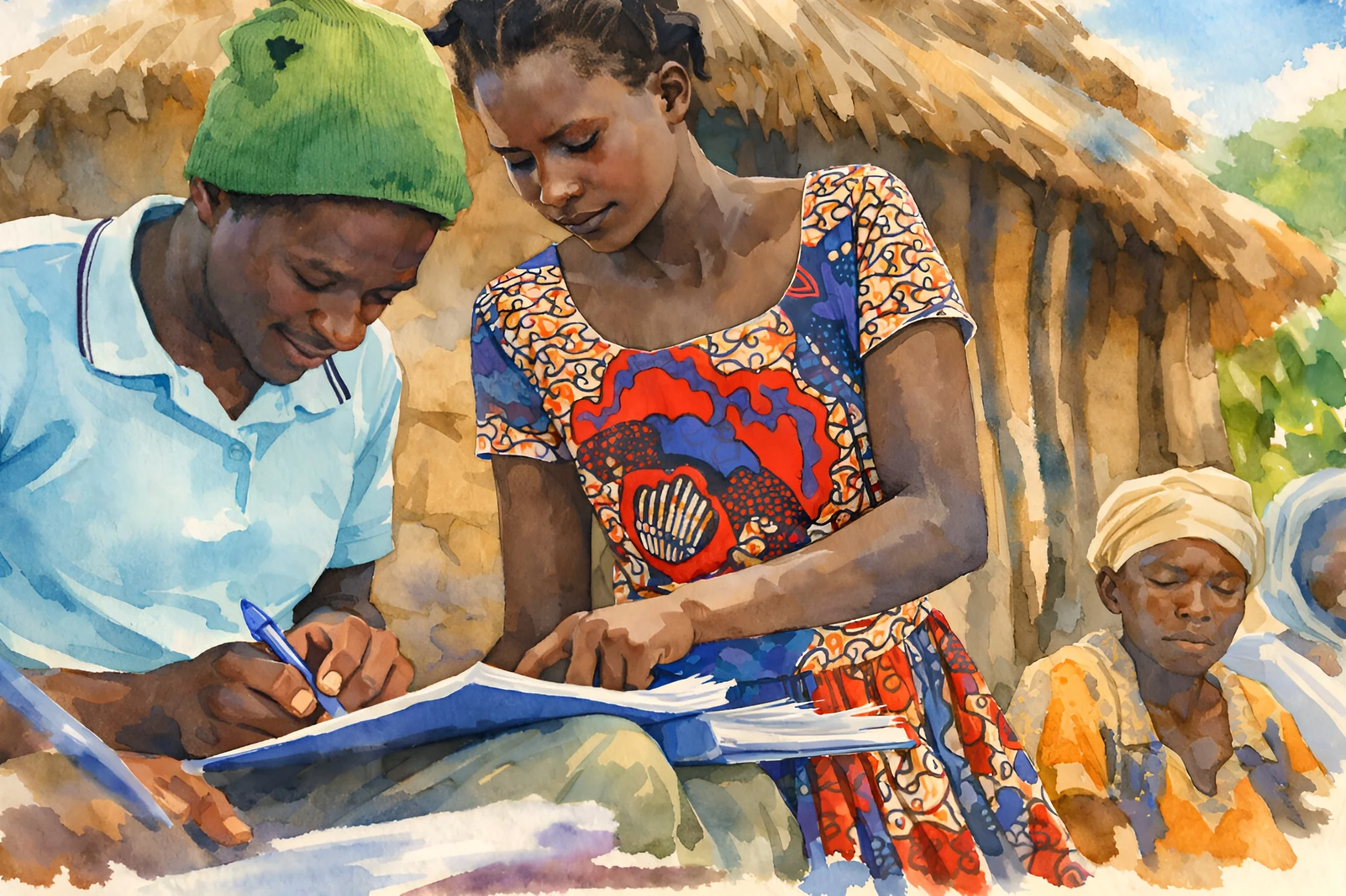
As a Peace Corps volunteer serving on Zambia's National Malaria Committee, I built a multi-language mobile survey to accelerate efforts by Zambia and the Peace Corps to collect critical malaria data for intervention planning.
Malaria's Devastating Impact in Zambia
More than 16 million people are at risk of malaria in Zambia. In 2015 alone there were over 5 million malaria cases with one in five children under age five infected with malaria parasites.
The disease remains a significant threat to all Zambians, but most of all to populations working in agriculture in rural areas with little access to treatments and mitigation resources.
Personal Witness to the Crisis
As a Peace Corps volunteer in Zambia, I saw firsthand how malaria impacted smallholder farmers. Each year I would attend the funerals of young children in my community who had contracted malaria and not made it through.
Remote agricultural communities face the highest malaria burden due to limited access to healthcare facilities, preventive resources like bednets, and accurate diagnostic testing.
These experiences led me to participate in Peace Corps Zambia's National Malaria Committee, which coordinated volunteer efforts to most effectively encourage malaria interventions throughout the country.
The Data Gap
My time on the committee demonstrated a critical need: a tool to quickly and effectively conduct community-based surveys on bednet use and other intervention behaviors.
Traditional paper-based surveys had significant limitations:
- Slow data turnaround - weeks or months between collection and analysis
- Data entry errors during transcription
- No geographic data linking cases to locations
- Limited reach due to transportation constraints
- Language barriers with fixed survey forms
Open Data Kit: A Mobile-First Approach
While serving in Zambia, I had been experimenting with Open Data Kit (ODK), an open-source mobile survey platform initially funded by Google and used by major organizations worldwide.
ODK is used by WHO, CDC, USAID, the Red Cross and Red Crescent, the Carter Center, and the Jane Goodall Institute for field data collection.
This software was built specifically for anyone to create user-friendly mobile surveys and securely upload data to the cloud for parsing and analysis.
Building by Solar Power
During evenings in my community, drawing power from a solar-powered car battery, I built a mobile multi-lingual malaria survey hosted on AWS for use with Open Data Kit.
The survey incorporated several advanced features:
Multilingual Support
- English, Chichewa, and Tumbuka language options
- Allowed surveyors to work in the respondent's preferred language
- Increased accuracy and community engagement
Conditional Logic
- Dynamic question flow based on previous answers
- Surveys remained concise and targeted
- Reduced survey fatigue and improved completion rates
GPS Integration
- Automatic location recording for each survey entry
- Enabled geographic mapping of malaria prevalence
- Supported targeted intervention planning
Cloud-Based Data
- Direct upload via cellular networks
- Eliminated manual data entry errors
- Enabled real-time analysis and reporting
Technical Architecture
The system consisted of:
- ODK Collect app on Android smartphones
- Custom XForms survey with validation rules
- AWS-hosted ODK Aggregate server for data storage
- Automated data export for analysis
National Adoption
This survey became the base file for a national mobile malaria survey conducted by the Peace Corps Zambia following my service.
Advantages Over Traditional Methods
The mobile survey approach offered significant improvements:
Real-Time Data
Survey data was available for analysis within minutes of collection, not weeks. This enabled rapid response to emerging patterns.
Improved Accuracy
Elimination of transcription errors and built-in validation rules ensured higher quality data for decision-making.
Geographic Insights
GPS coordinates allowed mapping of malaria prevalence, revealing hotspots and guiding resource allocation.
Scalability
Once deployed, the survey could be used by volunteers across the country without additional infrastructure investment.
Sustainable Impact
By building on an open-source platform with strong institutional support, the solution remained viable and maintainable beyond my service:
- No vendor lock-in - ODK is free and open source
- Community support - Large user community for troubleshooting
- Cloud hosting - AWS infrastructure ensured reliability
- Low cost - Minimal ongoing expenses for data storage
Technology in Resource-Constrained Settings
This project reinforced several key principles for technology implementation in challenging environments:
Appropriate Technology
The best solution isn't always the most advanced. ODK's simplicity and offline capabilities made it ideal for rural Zambia where internet connectivity was intermittent.
Open Source Matters
Using open-source tools ensured sustainability. The project didn't depend on proprietary software licenses or vendor support that might disappear.
User-Centered Design
Incorporating multiple languages and intuitive interfaces was critical. Technology adoption depends on meeting users where they are.
Build on Existing Platforms
Rather than building from scratch, leveraging ODK's proven platform saved months of development time and provided immediate credibility with partners.
The Power of Constraint
Working by solar-powered car battery in a rural village might seem like a limitation, but it forced creative problem-solving and ensured the solution would work in similar contexts across Zambia.
The most effective development technology is built in the same conditions where it will be used
Data for Decision Making
Quality data transforms good intentions into effective interventions. By providing Peace Corps volunteers and health officials with accurate, timely information about bednet use, malaria prevalence, and intervention gaps, the survey enabled evidence-based resource allocation.
Mobile data collection tools don't just make surveys easier - they fundamentally change what's possible in terms of rapid response and targeted interventions.
Take the Survey Yourself
This interactive demo lets you experience an abbreviated version of the mobile malaria survey — the same tool that was adopted nationally by Peace Corps Zambia. Answer six household intervention questions, then see how your responses compare to the average smallholder farmer in Eastern Province.
Choose your language and give it a try:
1 of 6
Do you sleep under an insecticide-treated bed net (ITN)?
2 of 6
Has your home been sprayed for mosquitoes in the last 12 months?
3 of 6
Do you remove standing water near your home or fields?
4 of 6
When you or your family has a fever, do you seek treatment within 24 hours?
5 of 6
Do children under 5 in your household sleep under a bed net every night?
6 of 6
Do you know where your nearest health facility is?
Survey Features
The mobile malaria survey included comprehensive modules for:
Household Information
- Geographic location (GPS)
- Household composition
- Housing construction materials
- Water and sanitation access
Malaria Knowledge
- Understanding of transmission
- Awareness of prevention methods
- Knowledge of symptoms
- Treatment-seeking behavior
Bednet Usage
- Number of nets owned
- Net condition and age
- Sleeping arrangements
- Usage patterns and barriers
Intervention Coverage
- Access to testing
- Availability of treatment
- Indoor residual spraying history
- Previous health education exposure
Technical Specifications
Platform: Open Data Kit (ODK) Collect for Android
Server: ODK Aggregate hosted on AWS EC2
Languages: English, Chichewa, Tumbuka
Data Format: XML (XForms standard)
Export Options: CSV, JSON, KML
Offline Capability: Full survey functionality without internet; sync when connection available
Security: TLS encryption for data transmission, access controls on server
Development Approach
- Requirements gathering with National Malaria Committee
- XForm development using XLSForm syntax
- Translation by local language speakers
- Field testing in my community
- Iteration based on user feedback
- Deployment to Peace Corps volunteers nationally
- Hartung C, Lerer A, Anokwa Y, Tseng C, Brunette W, Borriello G. (2010). Open Data Kit: Tools to Build Information Services for Developing Regions. Proceedings of the 4th ACM/IEEE International Conference on Information and Communication Technologies and Development (ICTD). [Link]
- Brunette W, Sundt M, Dell N, Chaudhri R, Breit N, Borriello G. (2013). Open Data Kit 2.0: Expanding and Refining Information Services for Developing Regions. Proceedings of the 14th Workshop on Mobile Computing Systems and Applications (HotMobile). [Link]
- Anokwa Y, Hartung C, Anokwa Y, et al.. (2009). Open Source Data Collection in the Developing World. Computer, 42(10), 97–99. [Link]
- Tomlinson M, Solomon W, Singh Y, et al.. (2009). The Use of Mobile Phones as a Data Collection Tool: A Report from a Household Survey in South Africa. BMC Medical Informatics and Decision Making, 9(1), 51. [Link]
- Källander K, Tibenderana JK, Akpogheneta OJ, et al.. (2013). Mobile Health (mHealth) Approaches and Lessons for Increased Performance and Retention of Community Health Workers in Low- and Middle-Income Countries: A Systematic Review. Journal of Medical Internet Research, 15(1), e17. [Link]
- Free C, Phillips G, Galli L, et al.. (2013). The Effectiveness of Mobile-Health Technology-Based Health Behaviour Change or Disease Management Interventions for Health Care Consumers: A Systematic Review. PLoS Medicine, 10(1), e1001362. [Link]
- Kumar S, Nilsen WJ, Abernethy A, et al.. (2013). Mobile Health Technology Evaluation: The mHealth Evidence Workshop. American Journal of Preventive Medicine, 45(2), 228–236. [Link]
- Labrique AB, Vasudevan L, Kochi E, Fabricant R, Mehl G. (2013). mHealth Innovations as Health System Strengthening Tools: 12 Common Applications and a Visual Framework. Global Health: Science and Practice, 1(2), 160–171. [Link]
- Wesolowski A, Eagle N, Tatem AJ, et al.. (2012). Quantifying the Impact of Human Mobility on Malaria. Science, 338(6104), 267–270. [Link]
- Bhatt S, Weiss DJ, Cameron E, et al.. (2015). The Effect of Malaria Control on Plasmodium falciparum in Africa between 2000 and 2015. Nature, 526(7572), 207–211. [Link]
- Gething PW, Patil AP, Smith DL, et al.. (2011). A New World Malaria Map: Plasmodium falciparum Endemicity in 2010. Malaria Journal, 10(1), 378. [Link]
- Chanda E, Mzilahowa T, Chipwanya J, et al.. (2011). Malaria Vector Control in Zambia: The Story of a National Indoor Residual Spraying Programme. Malaria Journal, 10(1), 261. [Link]
- Masaninga F, Chanda E, Chanda-Kapata P, et al.. (2013). Review of the Malaria Epidemiology and Trends in Zambia. Asian Pacific Journal of Tropical Biomedicine, 3(2), 89–94. [Link]
- Larsen DA, Chisha Z, Winters B, et al.. (2015). Malaria Surveillance in Low-Transmission Areas of Zambia Using Reactive Case Detection. Malaria Journal, 14(1), 465. [Link]
- Silumbe K, Yukich JO, Hamainza B, et al.. (2016). Costs and Cost-Effectiveness of a Large-Scale Mass Drug Administration Campaign in Southern Province Zambia. Malaria Journal, 15(1), 72. [Link]
- Hamainza B, Moonga H, Sikaala CH, et al.. (2014). Monitoring, Characterization and Control of Chronic, Symptomatic Malaria Transmission in a Rural Zambian Community. Malaria Journal, 13(1), 14. [Link]
- World Health Organization. (2015). Guidelines for the Treatment of Malaria, 3rd Edition. WHO Press, Geneva. [Link]
- World Health Organization. (2016). World Malaria Report 2016. WHO Press, Geneva. [Link]
- U.S. President's Malaria Initiative. (2016). Zambia Malaria Operational Plan FY 2016. USAID / PMI. [Link]
- Zambia National Malaria Elimination Centre. (2017). Zambia National Malaria Strategic Plan 2017–2021. Ministry of Health, Republic of Zambia. [Link]