The Humble, Lovable Sweet Potato
Partners





The Challenge
Vitamin A deficiency (VAD) affects 190 million preschool children and 19 million pregnant women around the world, with regions in Africa and South-East Asia being affected the most.[3]
In Zambia, like many developing countries, vitamin A deficiency largely affects pre-school children, pregnant and lactating mothers, and the rural poor.[8]
For these children, a lack of vitamin A causes severe visual impairment and blindness. In addition, the deficiency significantly increases the risk of severe illness, and even death, from common childhood infections.[3]
For pregnant women, vitamin A deficiency can result in night blindness and a marked increase in the risk of maternal mortality.
For more on Vitamin A deficiency, check out the WHO's report on micronutrient deficiencies and the WHO country profile for Zambia.
Food fortification and dietary diversification have all been employed in various forms to provide vitamin A supplementation. Unfortunately, these strategies have been prohibitively expensive, not so much in the production of the supplements, but in their delivery to rural areas. Specifically, "last mile" delivery.
The Approach
Sweet potatoes are a relatively low priced crop and one of the staple foods in Zambia. In introducing a sweet potato variety that's significantly higher in β-carotene, orange-fleshed sweet potatoes (Ipomoea batatas L. La, OFSP),[4] into the typical diet, it's possible to increase the bio-availability of different micro-nutrients such as Fe, Zn, Ca and Mg and to reduce vitamin A deficiency.[5]
This introduction has the potential to reduce child mortality rates by 23 to 30 percent[1]
The vibrant orange flesh of these sweet potatoes signals their high β-carotene content, which the body converts to vitamin A. Unlike expensive supplementation programs or fortified foods that require complex distribution networks, orange-fleshed sweet potatoes can be grown locally by smallholder farmers, making them a sustainable, community-based solution to malnutrition.[7]
My Role
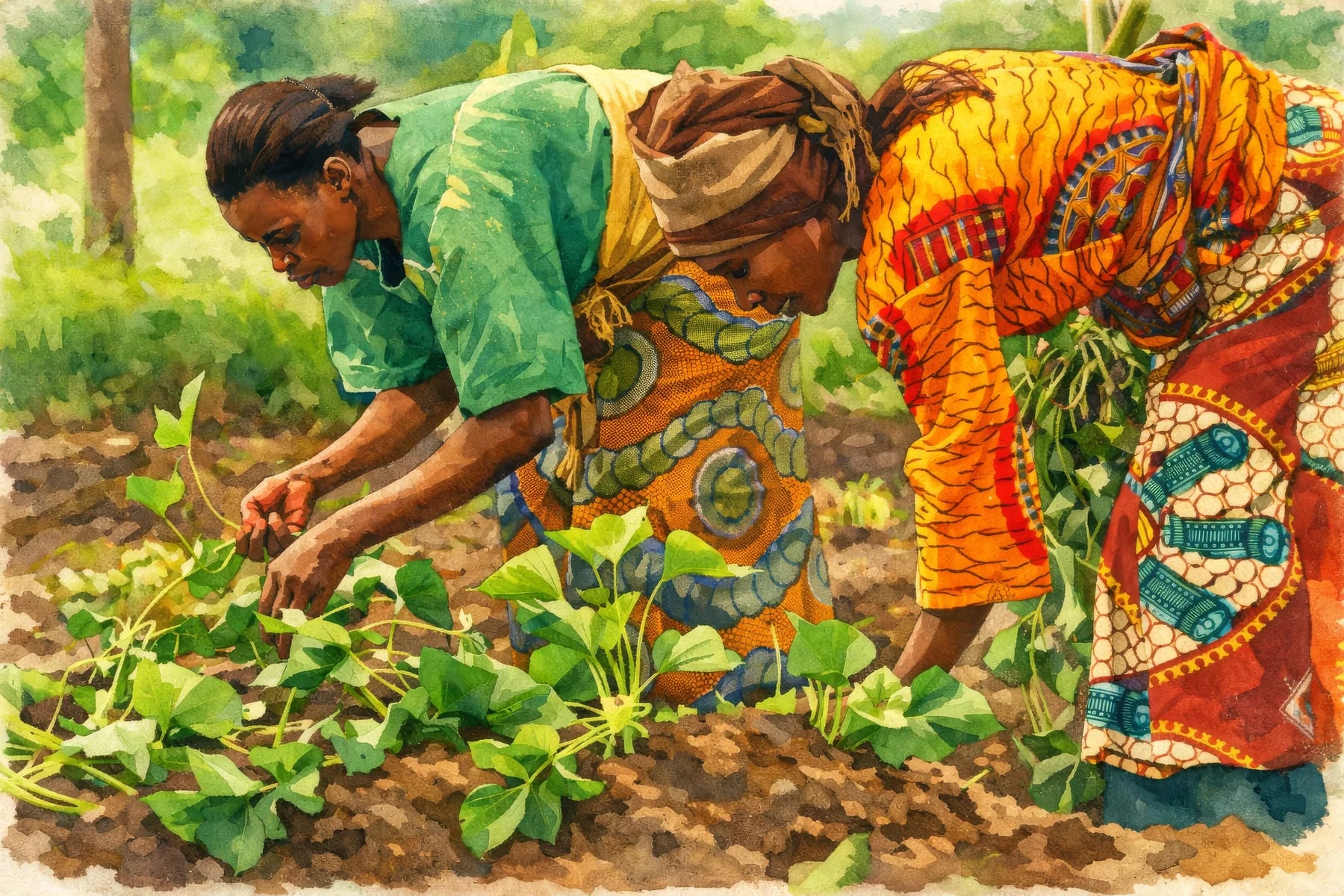
Partnered with NGOs and community women's groups, farmer cooperatives, and community leaders, I organized 11 separate orange-fleshed sweet potato workshops to introduce families and farmers to this crop, demonstrate and share recipes, and provide the root stock for planting their own orange-fleshed sweet potato crop.
These hands-on workshops combined:
- Nutritional education on vitamin A deficiency and its health impacts
- Agricultural training on OFSP cultivation techniques
- Recipe demonstrations showing how to prepare OFSP in traditional and new ways
- Distribution of vine cuttings so participants could start growing immediately
By working directly with community leaders and women's groups, we ensured the knowledge and resources reached those who needed them most — mothers and caregivers responsible for family nutrition and smallholder farmers who could integrate OFSP into their crop rotation.[6]
Growing Calendar
For farmers in Eastern Province, timing is everything. The calendar below shows the full OFSP crop cycle — from starting a vine nursery during the dry season through to the peak market window the following mid-year.
OFSP Seasonal Growing Calendar — Eastern Province, Zambia
Tap any row for details. Darker cells = peak activity; lighter cells = preparation or wind-down.
days/month
Calendar reflects typical rainy-season crop cycle for Eastern Province. Short-season irrigated plantings (Apr–Aug near streams) are also possible for experienced farmers with water access.
References
The 23–30% child mortality reduction estimate is drawn from Low et al. (2007), the landmark randomized food-based trial demonstrating that daily consumption of orange-fleshed sweet potato significantly raised serum retinol in Zambian and Mozambican children. Clinical confirmation of β-carotene's efficacy as a vitamin A precursor comes from van Jaarsveld et al. (2005), which used the gold-standard modified-relative-dose-response test in South African schoolchildren. Evidence at scale is provided by Hotz et al. (2012), whose large cluster-randomised intervention in Mozambique showed that community-level OFSP promotion durably increased child and maternal vitamin A intakes. Bouis & Saltzman (2017) situate OFSP within the broader biofortification evidence base, reviewing more than a decade of HarvestPlus trials across 40 countries. Country-level nutrition burden figures for Zambia are drawn from the 2015 NFNC Micronutrient Survey and the 2018 Zambia Demographic and Health Survey (DHS).
Orange-Fleshed Sweet Potato: Complete Cultivation Guide
Page 1 of 24
Orange Fleshed Sweet Potato
A Comprehensive Crop Guide for Zambian Farmers
Foreword
Foreword
Vitamin A Deficiency (VAD) is a cause of death of 1 in every 5 children. Orange Fleshed Sweet Potato (OFSP) is a solution that should be accessed by women farmers in order to diversify their household nutrition and fight VAD.
In order to enhance good nutrition among families, women farmers need to employ good agricultural practices and receive crop specific information.
This OFSP crop guide is meant to fulfill the vital requirement of supplementing Vitamin A intake among families.
The information contained in this book guide has been compiled over an OFSP production training series and is appropriate for all categories of farmers. The guide can also be used by extension officers, agricultural training institutions and other development partners.
It is therefore our sincere hope that this information will go a long way in improving Orange Fleshed Sweet Potato Production in Zambia and Africa at large.
Table of Contents
Introduction
Introduction
Sweetpotato (Ipomoea batatas (L.)) Lam, belongs to the family Convolvulacea. It is cultivated as an annual crop for both vines and storage roots. Resource-poor farmers in Zambia predominantly grow sweet potato; Orange Fleshed Sweet Potatoes (OFSP) in particular provides nutritional and health benefits, mainly for women and children under 5 years of age.
OFSP contains an antioxidant called beta-carotene, which is very effective at raising blood levels of vitamin A. Many development organizations have used Sweet potato as a driver to reduce Vitamin A Deficiency (VAD) in children, pregnant women and lactating mothers.
Climate Change Adaptation
OFSP is a suitable crop for Climate Change adaptation and Food and Nutrition security for the reason that it:
- Tolerates stresses such as drought and heat
- Can grow in many soil types with relatively low inputs
- Generally produces higher yields and superior gross margins than cereals
This training manual was developed to address some of the major barriers to OFSP production, utilization and processing.
Climatic and Soil Conditions
Climatic and Soil Conditions
OFSP is highly adaptable and can grow in most agro-ecological zones of Zambia. Temperature, light, rainfall, soil and altitude are the main environmental factors that affect the growth and development of the OFSP plant.
Rainfall Requirements
- First 40 days: Daily water is required
- Total rainfall: Above 500mm of rainfall is required per crop cycle
- Water logging: OFSP is susceptible to water logging at rooting, so planting should be done with good timing
Temperature Requirements
- Soil temperature: 16°C to 25°C
- Air temperature: 18°C to 35°C
- Frost sensitivity: Vines are destroyed by frost
Soil Requirements
- Preferred soil: Sandy loam, well-drained soils
- Avoid: Acidic/alkaline soils encourage bacterial infection and must be avoided
- Heavy clay soils: Hold back root development and should be avoided
Recommended Varieties & Record Keeping
Recommended Varieties
Recommended OFSP varieties found in Zambia are:
- Olympia
- Zambezi
- Orange Chingovwa
Farmers, especially first-time farmers, must work hand in hand with agriculture extension officers and agricultural researchers to acquire the desired varieties.
Record Keeping
Important Question: Do you have records of your previous farming activities?
All farming activities must be kept on written records by the farmer. Keeping records helps the farmer easily determine whether they have made a profit or loss if they are farming for business and also makes planning for the next cycle relatively easy.
Example Record Keeping Table
| Date | Activity | Cost | Comment |
|---|---|---|---|
| 15/08/2022 | Vine Planting | 0 | Well done |
| 16/08/2022 | Light Watering | Water: 25.00 | Well done |
| 24/10/2022 | Ridge Making | Labour: 150.00 | Done |
| 30/10/2022 | Manuring | Manure: 45.00 | Done |
Cultivation & Planting
Vine Multiplication
Vine Multiplication
Vines are multiplied using different densities depending on the intended use and the scale at which they are needed. Densities are either:
- Rapid Multiplication
- Modified Rapid Multiplication
- Conventional Multiplication
Steps for Vine Multiplication
1. Soil Preparation
Loosen the soil and mix with compost manure/humus-rich soil at 10-15cm depth near a water source at least 4 weeks before planting of the nursery.
2. Create Nursery Beds
- Width: 1.2m wide beds with walkways in between
- Length: 10-15m long
- Height: 20-50cm high
3. Planting the Vines
Well selected vines are planted at a good depth where one node of the cutting is placed into the soil.
4. Watering
Light watering should be done to moisten the soil so that it provides conducive establishment conditions. Farmers may also lightly water the vines prior to planting and water after planting.
5. Labeling
Labels with the date of planting and variety type should be placed for easy follow-ups and subsequent activity scheduling, especially where nursery expansion is required.
Vine Multiplication (Continued)
Nursery Protection
A fence can be built around the nursery to protect the plants from livestock.
Harvesting Vines for Planting
The vines should be harvested for replanting into the field after 2 to 3 months. Harvesting should be done:
- Early in the morning, or
- In the evening to avoid drying of vines
Transporting Vines
- Keep vines under shade
- Avoid squeezing vines when packing
- Transport them in the cool hours of the day when there is need
Land Preparation
Land Preparation
Land preparation for field production of OFSP involves:
- Site Selection
- Preparing ridges
- Burying manure in the ridges
Site Selection
- Use flat land free of stumps and rocks
- If using a slope, the orientation of the ridges should be against the slope and not with the slope
- Ridges are recommended because they provide more room for the growth of roots and ease harvesting
Question: Can you explain why we use ridges?
Ridges provide better drainage, warmer soil temperatures, more space for root development, and make harvesting much easier.
Spacing
- Distance between ridge tops: 1m
- Average ridge height: 45cm
Land Preparation (Continued)
Fertilization
Fertilizers derived from animal matter, human excreta or vegetable matter (compost, manure) can be applied. Manures should be applied 3 to 4 weeks before planting.
Manure Requirements
Sweet Potato requires 1000 to 1500 kg per Lima (or 4000-6000 kg per Hectare) of well-decomposed kraal manure, which should be broadcasted well into ridges during land preparation at three to four weeks before planting.
Potassium Importance
Potassium (K) is the most important nutrient for OFSP and can be found in ash. Adding fire ash to the soil can help prevent potassium deficiency.
Planting Material
Planting Material
Planting material of sweet potatoes are called vines. It is at planting material selection that one can choose to plant any OFSP variety.
Sourcing Quality Vines
A farmer who does not multiply his or her own vines should obtain them from reliable sources, i.e., vine multipliers who have:
- Good control of quality
- Maintain pure varieties
Vine Quality Requirements
Age of Mother Crop
The mother crop should be 2-3 months old. Vines from 2-3 months old crop are:
- More vigorous
- Comparatively free from weevils
Health Requirements
- Vines should be free from pests and diseases
- Vines should not be dry at planting for good plant establishment
Planting
Planting
The planting operation involves pushing the lower parts of the vine cuttings into the soil, such that they are nearly horizontal.
Spacing and Population
- Spacing between vines on ridge: 25-30cm
- Total population: 8,333 vine cuttings per Lima (33,333 cuttings per Hectare)
Important: It is important to have sufficient planting materials by the onset of the rains to achieve a set target.
Planting Time
Planting time is the period in which local conditions such as rainfall and temperature permit normal plant growth. OFSP can be planted at any time so long as:
- There is no frost
- There is sufficient moisture in the soil
Recommended Planting Period
The recommended planting time for OFSP is at the onset of the normal to above normal rains. It is best to plant OFSP early in the rainy season so that it has the entire rainy season to grow.
Crop Management
Common Pests and Diseases
Common Pests and Diseases
Major Pests
Sweet Potato Weevil
Description: The most serious pest of sweet potato
- Adult weevils are dark blue or black with orange-red thorax
- Larvae tunnel into vines and storage roots
- Creates bitter taste making roots inedible
Control:
- Use clean, pest-free planting material
- Practice crop rotation
- Harvest on time
- Remove and destroy infested roots
Millipedes
Description: Feed on storage roots creating holes
- Most active during wet periods
Control:
- Keep field clean of crop residues
- Practice crop rotation
Common Diseases
Alternaria Blight
Symptoms: Dark brown spots on leaves
Control:
- Use resistant varieties
- Remove and destroy infected leaves
Sweet Potato Virus Disease (SPVD)
Symptoms:
- Stunted growth
- Distorted leaves with purple veins
- Reduced yield
Control:
- Use clean planting material from certified sources
- Control aphids (virus vectors)
- Remove infected plants immediately
Crop Protection
Crop Protection
Integrated Pest Management (IPM)
An effective pest and disease management strategy combines:
-
Cultural Practices
- Crop rotation
- Field sanitation
- Timely planting and harvesting
- Using clean planting material
-
Biological Control
- Encourage natural predators
- Use bio-pesticides when available
-
Chemical Control
- Use only when necessary
- Follow label instructions carefully
- Use protective equipment
- Observe pre-harvest intervals
Prevention is Key
Remember: Prevention is always better and cheaper than cure. Focus on using healthy planting material and good agricultural practices.
Recommended Management Practices
Recommended Management Practices
Weeding
Frequency: Weed 2-3 times during the growing season
- First weeding: 3-4 weeks after planting
- Second weeding: 6-8 weeks after planting
- Third weeding: If necessary, 10-12 weeks after planting
Method:
- Hand weeding is recommended
- Be careful not to damage the vines or developing roots
Watering / Irrigation
Water requirements vary by growth stage:
-
Establishment (First 40 days):
- Regular watering required
- Keep soil consistently moist
-
Vegetative Growth (40-90 days):
- Moderate water needs
- Water during dry spells
-
Root Bulking (90-120 days):
- Reduce watering
- Allow soil to dry slightly between waterings
-
Pre-Harvest (Last 2 weeks):
- Stop watering
- Allows roots to mature and sugar content to increase
Management Practices (Continued)
Gap Filling
Replace any vines that did not establish within 2 weeks of planting to maintain optimal plant population.
Vine Turning
Purpose: Prevents vines from rooting at nodes away from the main plant
- Reduces competition for nutrients
- Concentrates root development under the main plant
When: 8-10 weeks after planting
How: Carefully lift and turn vines without breaking them
Mulching (Optional)
Benefits:
- Conserves soil moisture
- Suppresses weeds
- Regulates soil temperature
- Adds organic matter
Materials: Use available organic materials like grass, crop residues
Application: Apply 5-10cm layer around plants
Harvest & Storage
Harvesting
Harvesting
When to Harvest
OFSP is ready for harvest 90-120 days after planting, depending on:
- Variety
- Weather conditions
- Intended use
- Market demand
Signs of Maturity
- Vine color: Vines begin to turn yellow
- Leaf drop: Lower leaves start falling
- Root size: Dig test holes to check root size
- Skin set: Skin does not easily scrape off
Tip: Don't wait too long after maturity, as over-mature roots may develop cracks and become susceptible to weevil damage.
How to Harvest
- Cut vines: Cut vines 15-20cm above ground level
- Save vine cuttings: Set aside healthy vines for next planting
- Loosen soil: Use a fork or hoe to gently loosen soil around roots
- Lift carefully: Remove roots carefully to avoid bruising
- Sort immediately: Separate damaged, diseased, or undersized roots
Harvesting (Continued)
Harvesting Best Practices
Time of Day:
- Harvest during cool morning or evening hours
- Avoid harvesting wet soil (difficult and damages roots)
Handling:
- Handle roots gently to avoid bruising
- Bruised roots deteriorate quickly
- Don't throw or drop roots
Yield Expectations:
Average yields vary by:
- Variety
- Management practices
- Soil fertility
- Weather conditions
Typical yields:
- Good management: 20-30 tons per hectare (5-7.5 tons per Lima)
- Excellent management: 35-45 tons per hectare (8.75-11.25 tons per Lima)
Post Harvest Practices
Post Harvest Practices
Curing
Purpose: Allows minor wounds to heal and skin to toughen
- Improves storability
- Reduces weight loss
- Prevents disease entry
Method:
- Place roots in warm (28-30°C), humid (85-90%) conditions
- Duration: 5-7 days
- Ensure good air circulation
Storage
Short-term Storage (1-2 weeks)
- Keep in cool, dry, well-ventilated place
- Spread in single layers on shelves or in crates
- Sort regularly and remove spoiled roots
Medium-term Storage (1-3 months)
- Cure first
- Store at 13-15°C with 85-90% humidity
- Check weekly for spoilage
Warning: Do NOT refrigerate sweet potatoes. Cold temperatures cause internal breakdown (chilling injury).
Post Harvest (Continued)
Vine Conservation
Saving vines for next season is crucial for continuity:
Method 1: In-field Conservation
- Leave some plants unharvested
- Provides vine source for next season
- Protect from livestock and pests
Method 2: Nursery Bed Storage
- Plant healthy vines in nursery beds
- Maintain with light watering and weeding
- Provides year-round vine source
Method 3: Cutting Storage
- Cut 30cm vine cuttings from healthy plants
- Store in cool, shaded place
- Sprinkle with water every 2-3 days
- Good for 1-2 weeks
Quality Maintenance
Regularly check stored roots and remove any showing:
- Rot
- Weevil damage
- Sprouting
- Shriveling
Acknowledgements
Acknowledgements
This OFSP Crop Guide was developed through collaboration with farmers, agricultural extension officers, and development partners committed to improving nutrition and food security in Zambia.
Special Thanks To:
- Smallholder farmers who participated in OFSP workshops
- Agricultural extension officers for their technical expertise
- Community leaders who facilitated workshop organization
- Partner organizations for their continued support
Partners
For more information about OFSP cultivation, contact your local agricultural extension officer or visit the National Food and Nutrition Commission of Zambia.