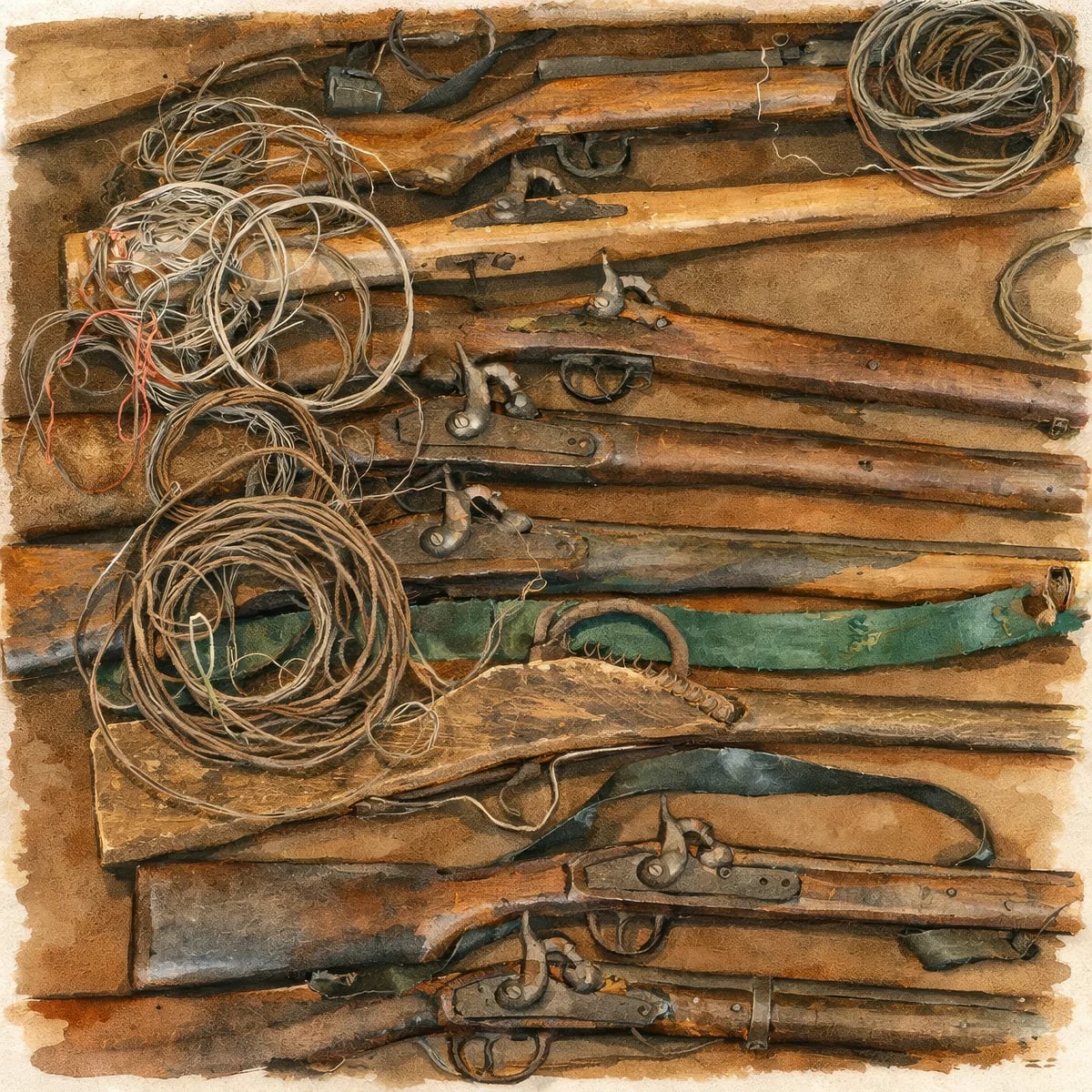
Zambian Poacher Reformation Program at COMACO
Partners
In Zambia, Community Markets for Conservation (COMACO) provides training and incentives to poachers seeking a new life and new livelihoods.
Life as a Zambian smallholder farmer is incredibly difficult — families are socially and economically vulnerable, especially during the growing season when food is scarce and money is even more scarce. For many living in the wildlife-rich Luangwa Valley of Zambia, these conditions turn small-scale farmers to poaching, a livelihood which is as dangerous as it is lucrative.[1]
The Poaching Crisis
The impact of poaching in the Luangwa Valley has been devastating. Between the 1970s and 1990s, elephant numbers fell by more than half due to intensive commercial and subsistence poaching.[4] Researchers estimate that, at one point, poaching killed over 5,000 animals a year.[3]
The black rhino population, once estimated at tens of thousands across Zambia's Luangwa Valley, was driven to complete local extinction by the early 1990s through relentless poaching for rhino horn.[5] Despite decades of enforcement-heavy anti-poaching efforts, the problem persisted — suggesting that punitive approaches alone were insufficient.[6]
Wildlife Populations: South Luangwa Valley (1973–2024)
Each species shown as % of its 1973 population. Drag the slider right to reveal what happened next.
Sources: IUCN African Elephant Database (AED) aerial survey records; CITES MIKE Carcass Summary 2003–2024; Zambia Department of National Parks & Wildlife (DNPW); South Luangwa Conservation Society annual wildlife monitoring reports. Pre-2003 figures are survey-period estimates with inherent uncertainty.
Loading map data...
Poaching in the Luangwa Valley is driven by a complex web of poverty, food insecurity, and lack of alternative livelihoods. Ethnographic research by Stuart Marks documented how subsistence hunting has deep cultural roots in Zambian communities, and that addressing poaching requires understanding the socioeconomic realities of rural life.[3]
Why Enforcement Alone Fails
A landmark study in World Development examined integrated conservation-development projects (ICDPs) across Sub-Saharan Africa and found that enforcement-only approaches to poaching consistently fail when communities lack viable economic alternatives.[7] This insight — that conservation must be paired with livelihood improvement — became the theoretical foundation for programs like COMACO.
The Luangwa Valley's own history illustrates this. Earlier community wildlife management programs such as ADMADE (Administrative Management Design for Game Management Areas) showed promise in engaging local communities, but struggled with sustainability and equitable benefit-sharing.[8]
COMACO's Model
COMACO's approach to poaching is unique and refreshing in light of the typical stigma and demonization of farmers who poach. Rather than treating poaching as purely a law enforcement problem, COMACO (Community Markets for Conservation) works directly with illegal wildlife poachers to offer alternative livelihood skills, including practices in climate-smart sustainable agriculture.[9]
Instead of trying to arrest them, we trained them to farm and provided a market where there was none.
Poachers and their communities, in exchange for COMACO's services, sign Community Conservation Plans and Forestry Management Plans, and willfully surrender their snares and guns. The model creates a virtuous cycle: improved farming techniques boost food production, surplus crops are purchased at premium prices under the It's Wild! brand, and revenues recycle back to reward conservation compliance.[1]
Research from eastern Zambia confirms that this model — harmonizing conservation with food security and ecotourism — produces measurable improvements in both wildlife populations and rural livelihoods.[10] Climate-smart agricultural practices, including conservation farming and minimum tillage, have been shown to significantly improve livelihood outcomes for Zambian smallholder farmers.[11]
For a comprehensive history of community-based conservation in the Luangwa Valley, see Lessons from Luangwa by Dalal-Clayton & Child (2003), which documents the pioneering efforts that paved the way for COMACO's approach.[8]
My Role
In my role as Content Manager and Data Analyst at COMACO, I supported staff overseeing the Poacher Reformation Program. I would frequently help develop conservation agreements and contracts, training manuals and presentations, and GIS documents — the kind of community engagement tools that Lewis (1995) identified as essential for effective community-based wildlife management.[2]
Historical context on poaching and wildlife decline in the Luangwa Valley from Marks (2017), Dunham (2001), and Rutherford (2016). The community-based conservation paradigm is grounded in Barrett and Arcese's (1995) seminal analysis of ICDPs in Sub-Saharan Africa, with Luangwa-specific history documented by Dalal-Clayton and Child (2003). COMACO's model is detailed in Lewis, Kaweche and Mwenya (2011) and Lewis (1995). Regional validation from Nyirenda et al. (2017) and climate-smart agriculture evidence from Ngoma (2018).
- COMACO. (2019). Community Markets for Conservation. It's Wild! by COMACO. [Link]
- Lewis, D.M.. (1995). Importance of GIS to community-based management of wildlife: lessons from Zambia. Ecological Applications, 5(4), 861-871. [Link]
- Marks, Stuart A.. (2017). Large Mammals and a Brave People: Subsistence Hunters in Zambia. Routledge (reprint edition). [Link]
- Rutherford, Benjamin. (2016). Zambia's illegal wildlife trade - in pictures. The Guardian. [Link]
- Dunham, K.M.. (2001). Reintroduction of black rhino in the Luangwa Valley, Zambia. Report for the Zambia Wildlife Authority. [Link]
- Dobson, A. and Lynes, L.. (2008). How does poaching affect the size of national parks?. Trends in Ecology and Evolution, 23(4), 177-180. [Link]
- Barrett, C.B. and Arcese, P.. (1995). Are integrated conservation-development projects (ICDPs) sustainable? On the conservation of large mammals in sub-Saharan Africa. World Development, 23(7), 1073-1084. [Link]
- Dalal-Clayton, B. and Child, B.. (2003). Lessons from Luangwa: The story of the Luangwa Integrated Resource Development Project, Zambia. International Institute for Environment and Development (IIED). [Link]
- Lewis, D., Kaweche, G.B., and Mwenya, A.. (2011). Community Markets for Conservation (COMACO) links biodiversity conservation with sustainable improvements in livelihoods and food production. Proceedings of the National Academy of Sciences, 108(34), 13957-13962.
- Nyirenda, V.R., Kaoma, C., Nyirongo, S., et al.. (2017). Ecotourism and food security in wildlife-agrarian mosaic landscapes: insights from eastern Zambia. International Journal of Tourism Policy, 7(2). [Link]
- Ngoma, H.. (2018). Does minimum tillage improve the livelihood outcomes of smallholder farmers in Zambia?. Food Security, 10, 381-396. [Link]